
article · 2026-06-24
Can AI Make Game Music, Voice, and Sound Effects?
Audio is the most automated kitchen in game development — 2.2 on our buildability model — but one ingredient still needs a human at the desk.
Short answer: yes, and audio is the kitchen AI has come closest to finishing
If you came here asking whether AI can write your game's music, voice your characters, and produce your sound effects, the honest answer is yes — and more completely than for almost any other part of a game. When we broke games down into roughly 45 reusable ingredients across five kitchens for our Games-as-Recipes study, audio came out as the single most automatable kitchen of them all, with an average ingredient difficulty of 2.2 on our buildability model. Art sits at 2.57, narrative at 2.78, code at 3.0, and polish and feel all the way up at 3.75. Audio is the front of the pack.
A word on what that 2.2 actually is, because it changes how you should read everything below. Our AI-build difficulty score is an editorial 1-to-5 judgement of what AI tooling can do today — 1 means AI does the job near end-to-end and a human curates; 5 means expert, real-time craft that resists automation almost completely. It is our assessment of the tooling, not a measurement, and crucially it measures how automatable the parts are, not whether the finished game is any good. A soundtrack a model generates in a minute can still be forgettable. Buildable is not good.
With that caveat in hand, the audio kitchen is unusually clean to reason about, because four of its five ingredients sit in the easy band and only one climbs into hard territory. Knowing which is which tells you exactly where to spend a human and where to let the tools run.
Voice and VO: the single most automated craft in all of game development
Of every one of the ~45 ingredients we scored across the whole of game development, one stands alone at the most automatable extreme: voice acting and VO, which we rate a difficulty 1 — the single most-automated craft in games. Nothing else in the ledger is easier for AI to take over. AI voice generation today produces clean, directable, multi-character dialogue from text, in volume, in a way that would have required a cast, a booth, and a schedule only a couple of years ago.
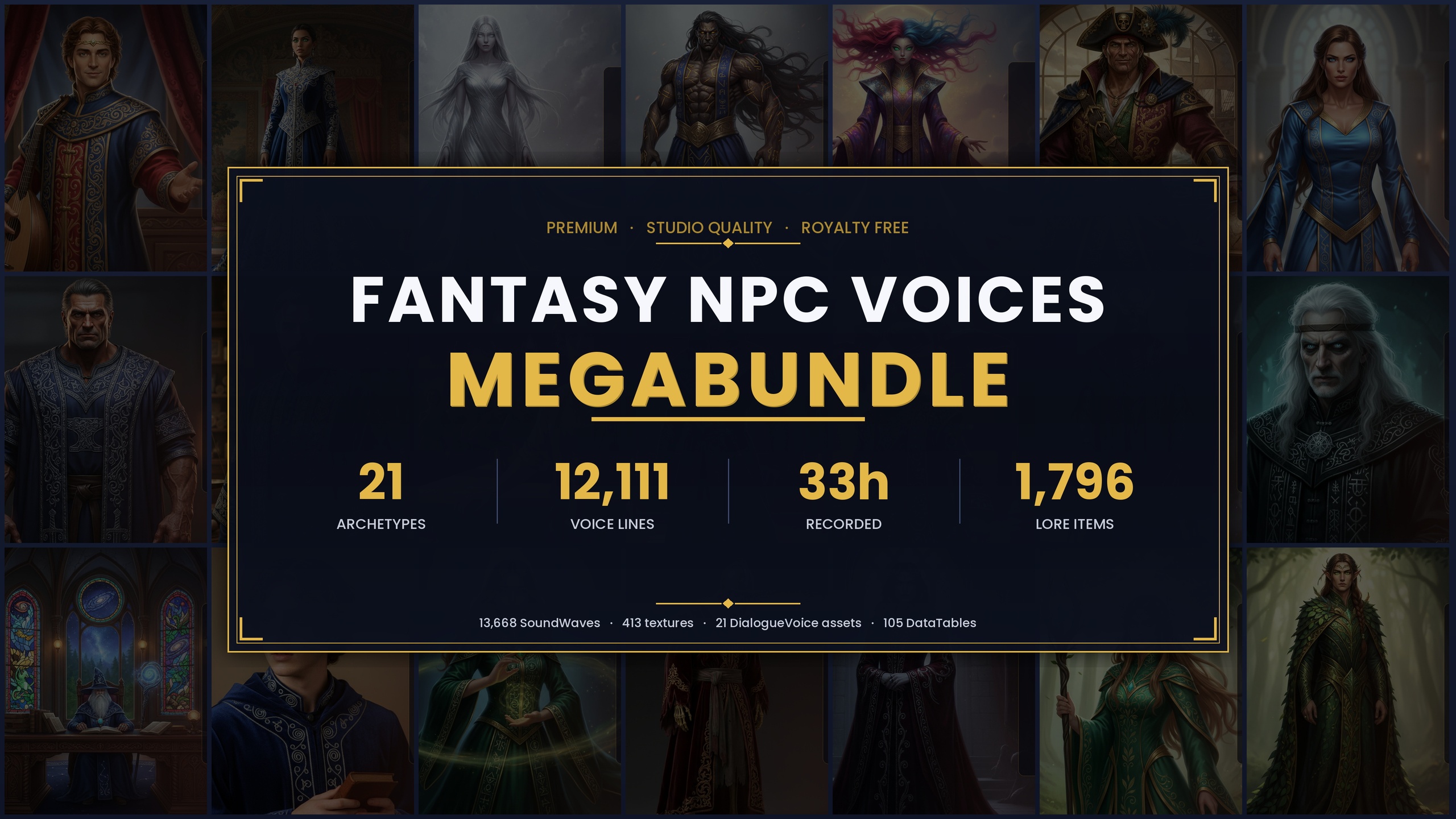
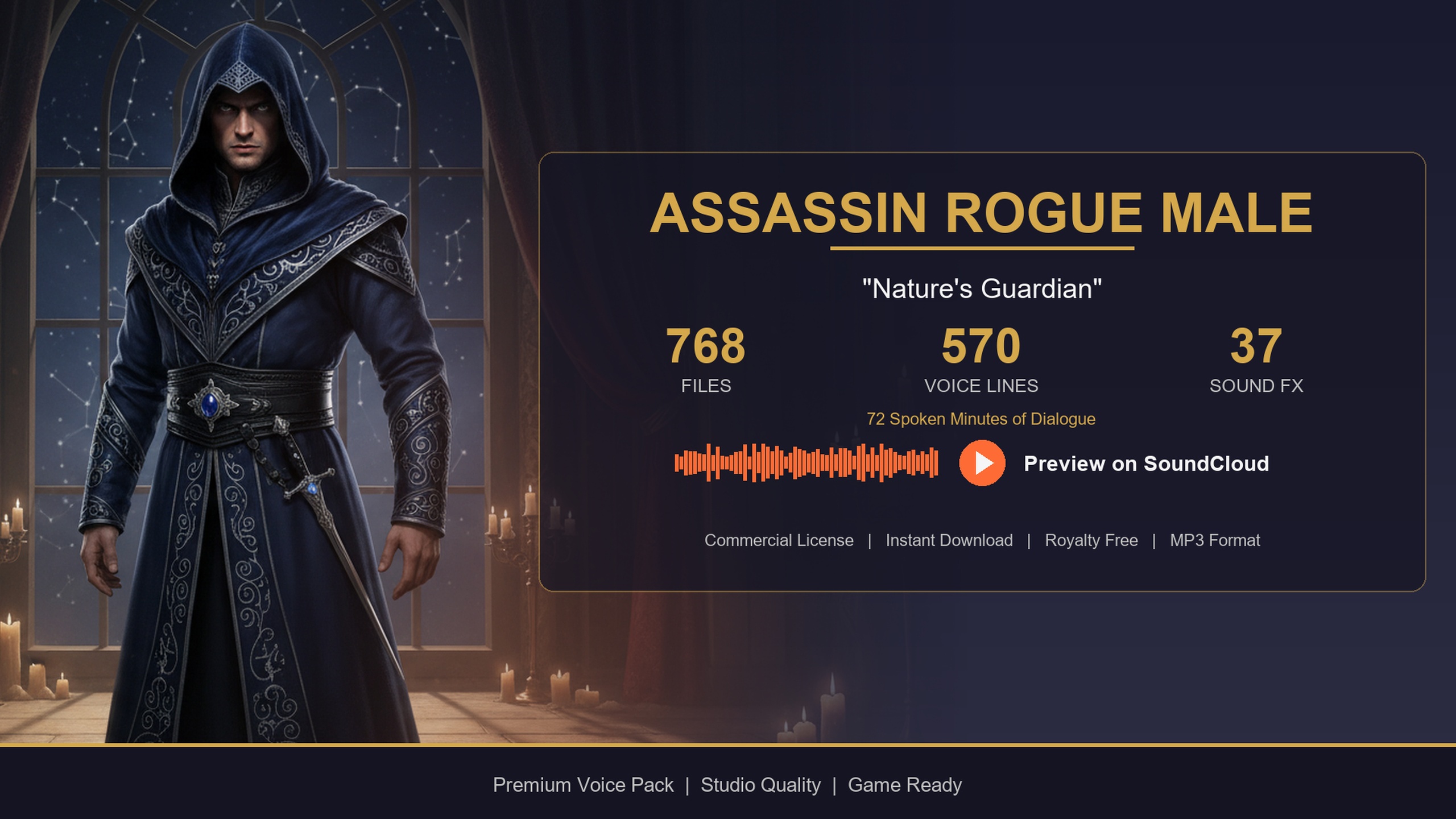
That matters most for the part of a game that scales worst with human labour: the NPC chatter that fills a world. A shopkeeper with forty barks, a tavern crowd, a guard with idle lines for three times of day — these are exactly the jobs where casting and recording real actors stops being affordable, and exactly where generated voice shines. This is the gap our own Fantasy NPC Voices pack is built to fill: ready-to-drop fantasy character voices for the background roles that bring a world to life without a recording budget, the assassins, the merchants, the townsfolk who each need a handful of believable lines.
The honest limit is the same one that governs the whole kitchen. Generation is solved; direction and taste are not. AI will hand you a hundred takes of a line in seconds, but choosing the take that lands, catching the one that reads robotic, and keeping a character's voice consistent across a hundred lines is still a human job. The labour of voicing a game has collapsed. The judgement of whether it sounds alive has not.
Music, SFX, and ambient soundscapes: all in the easy band
The next three ingredients move together and all land at difficulty 2 on our buildability model: music, sound effects, and ambient soundscapes. These are firmly in the AI-easy band, just one notch harder than voice. Text-to-audio and text-to-music tools will generate a looping exploration theme, a sword clash, a rain-soaked forest bed, or a UI confirmation blip on demand, and the quality bar for background and incidental audio is one those tools routinely clear.
The reason these score so well is the same reason artefact generation scores well everywhere in our study: each of these outputs can be judged on its own. A loop either sounds good or it does not. An impact either reads as a hit or it does not. There is no real-time, against-a-player constraint binding the output, so the tool can be evaluated in isolation and a human can keep the good ones and bin the rest. That is the pattern that separates AI's strong zone from its weak one across every kitchen.
Where a human still earns their keep is curation and cohesion: making sure the combat theme and the exploration theme feel like one score, that the footstep set matches the surface library, that the ambience does not loop audibly every eight seconds. AI gives you a deep, cheap bench of raw audio. Turning a bench of clips into a soundtrack with an identity is the part you still do by ear.
The one hard part: adaptive and interactive music is a 4, not a 2
There is exactly one ingredient in the audio kitchen that breaks the pattern, and it is the one people most often confuse with the easy ones. Adaptive and interactive music — a score that reacts to play, layering in tension as enemies approach, resolving when combat ends, transitioning seamlessly between states — scores a 4 on our buildability model, putting it up in the same hard band as combat systems and level design rather than down with its own kitchen-mates.
The reason is a clean and useful distinction. Generating the clips is the easy 2: AI will happily hand you a calm layer, a tension layer, and a combat layer. Wiring them together is the hard 4. The craft is not the audio — it is the middleware. Building the vertical layers and horizontal transitions, setting the stingers and crossfade rules, and hooking the whole thing into gameplay state through a system like the engine's audio tooling or a dedicated middleware layer is interactive-systems work, and interactive-systems work is where AI's leverage drops off sharply. The clip is an artefact; the reactive system is synthesis under real-time constraints, and that is the line AI struggles to cross anywhere in a game.
So the practical read is: do not let the easy clips fool you into budgeting the whole job as easy. If your game leans on music that breathes with the action — a horror title, an action RPG, anything where the score is a gameplay system rather than a backdrop — treat the music itself as nearly free and reserve real human and engineering time for the wiring. That single ingredient is the difference between a 2.2 kitchen and a sleepless integration week.
Why audio being easy is a setup, not a finish line
Here is the part that should make you slightly suspicious rather than relieved. The fact that audio is the most automatable kitchen means it is also the most commoditised. If a generalist can score, voice, and fill a game with sound for almost nothing, so can every other developer shipping this year. Cheap audio does not differentiate a game; it just stops bad audio from sinking one. The advantage moves elsewhere.
This is the same logic that runs through our whole AI Game-Buildability Radar. Across the catalogue of roughly 82,000 released games, the genres whose cores live in AI's easy kitchens — audio, plus art and the writing-heavy corners of narrative — are exactly the ones a small team can now build. The four things AI still cannot do are game feel and juice, real-time authoritative netcode, level and puzzle and encounter design, and the 'is it fun?' balance loop. Audio's one hard ingredient, adaptive music, is interactive-systems work for the same reason those four are: it can only be judged in motion.
So treat your generated audio as the table stakes it is. Let the tools produce the music, the effects, the ambience, and the wall of NPC voices for a fraction of the old cost, and pour the time you saved into the craft AI cannot commoditise — the feel, the design, the tuning that decides whether the game is worth playing at all.
Where audio sits in a real recipe: the writing-heavy genres
Audio rarely decides a genre on its own, but it tilts the buildability of the content-heavy ones the most, because those games are made largely of pictures, sounds, and words. In our buildability model the most automatable archetypes are visual novels at 1.80, interactive fiction at 1.83, point-and-click at 1.94, hidden object at 2.07, and clicker and idle games at 2.23 — all built from ingredients in AI's strong zone, audio very much included. A visual novel's voice track and music score are no longer a barrier to shipping; they are a curation task.
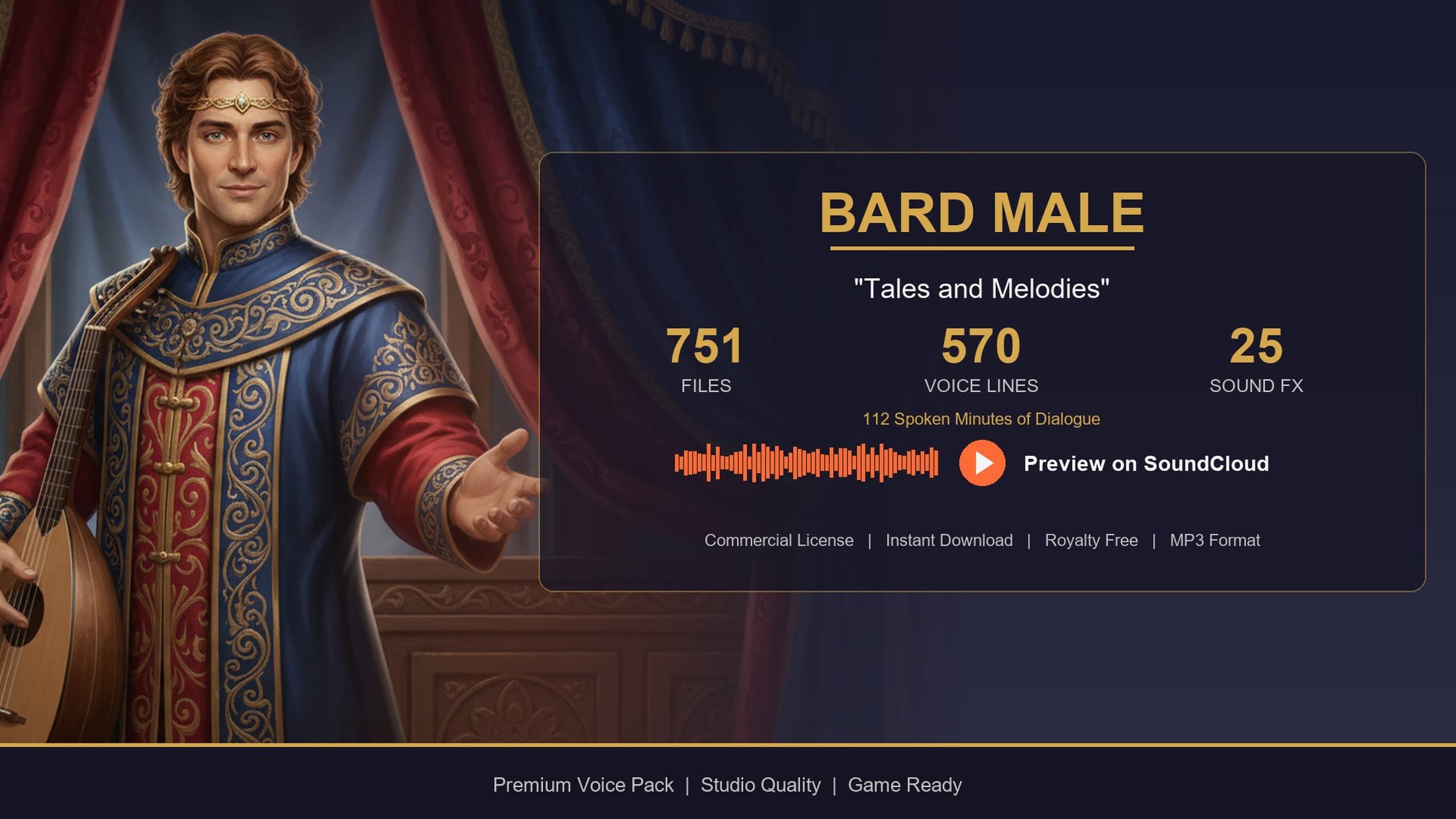
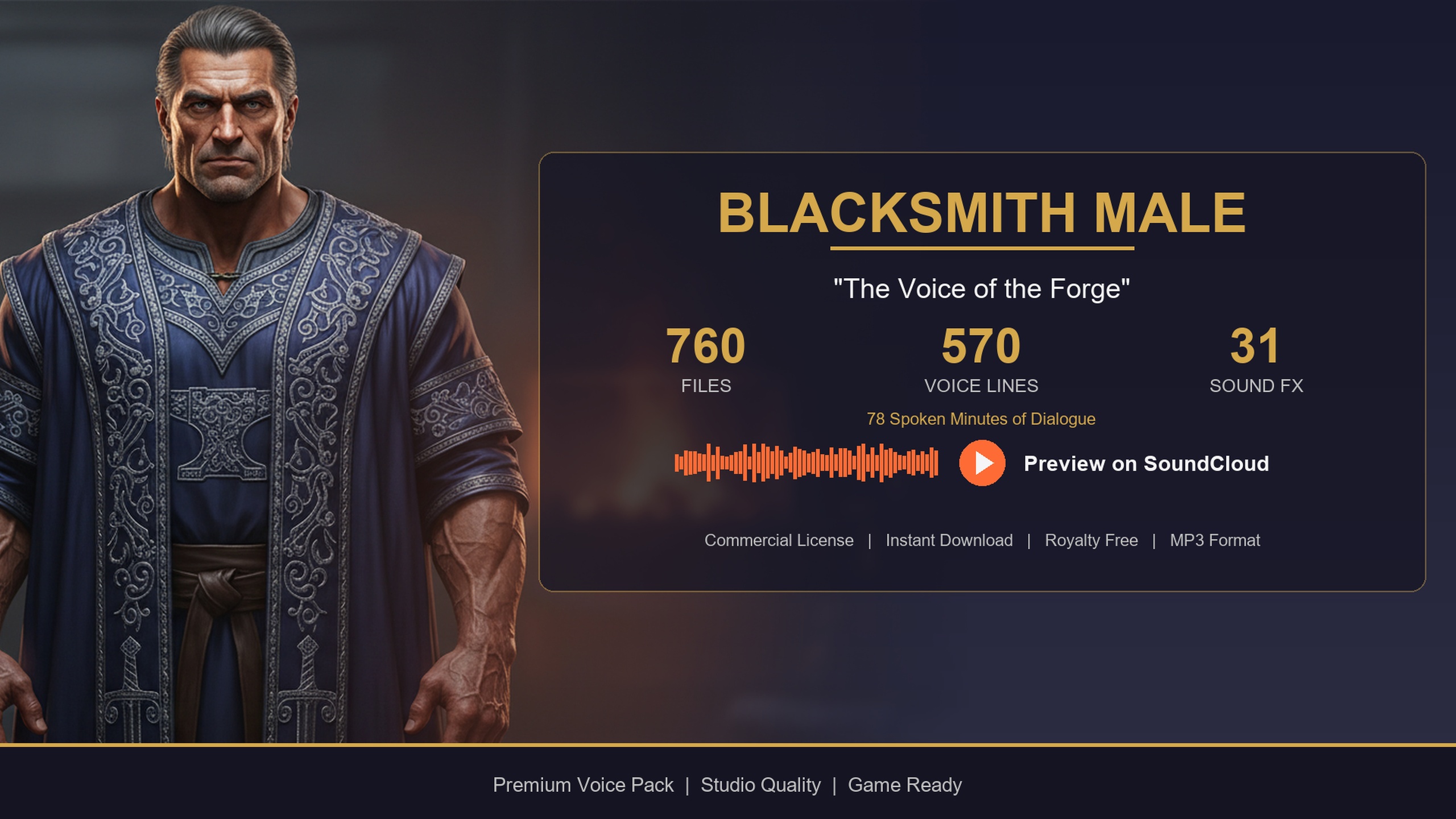
Cross that against demand and a short, specific list of opportunities appears — genres that are both AI-easy to build and still being made at volume. Interactive fiction carries 3,137 titles with 48% released since 2023; hidden object 4,172 titles at 45% recent; clickers 2,174 at 47%; walking simulators 3,171 at 51%; card games 2,180 at 45%. These are content-and-audio genres where the thing AI builds best overlaps with an audience that keeps showing up. A pack like Fantasy NPC Voices, alongside our writing-led Bard, Blacksmith, and Assassin dialogue packs, is aimed squarely at that overlap — drop-in audio and lines for the worlds these genres are made of.
The contrarian note worth keeping in view: the fastest-growing genre in the catalogue is deckbuilding, 64% released since 2023, yet it scores a hard 3.18 because its core is balance, not content. Its card art and its flavour audio generate themselves for free; its soul resists automation. That is the shape of every smart bet here — let AI build the audio for nothing, and spend your budget on the part it cannot touch.
How to actually use AI audio in your next build
Start by sorting your audio list against the kitchen. Voice and VO (difficulty 1), then music, SFX, and ambience (difficulty 2), all go in the 'generate and curate' pile — produce them in volume with AI tooling, then spend your human time choosing, cleaning, and unifying rather than creating. For the wall of NPC dialogue specifically, a ready-made voice pack saves you even the generation step and the consistency headache, which is the niche our Fantasy NPC Voices pack is built for.
Then ring-fence the one hard ingredient. If your design calls for adaptive, reactive music (difficulty 4), plan it as an engineering task, not an asset task. Generate the layers cheaply, but budget real time for the middleware wiring — the states, transitions, and stingers that make a score respond to play. Underbudgeting that step is the most common way an 'easy' audio plan blows up.
And keep the load-bearing caveat pinned to the wall the whole way through. Every number here — the 2.2 kitchen average, the difficulty 1 on voice, the 4 on adaptive music — is our editorial assessment of what AI tooling can do today, not a measurement, and it scores how automatable the parts are, not whether the result is good. AI has made game audio cheap and fast. Making it memorable is still on you.
The five kitchens, ranked by how much AI can build
| Kitchen | Average difficulty (lower = easier) |
|---|---|
| Audio | 2.2 |
| Art | 2.57 |
| Narrative | 2.78 |
| Code | 3.0 |
| Polish / feel | 3.75 |
Average ingredient difficulty per kitchen on our buildability model (1-5, lower = more automatable). Editorial assessment of current tooling, not a measurement.
Inside the audio kitchen, ingredient by ingredient
| Audio ingredient | Difficulty | Band |
|---|---|---|
| Voice acting / VO | 1 | AI does it near end-to-end |
| Music | 2 | AI-easy |
| Sound effects (SFX) | 2 | AI-easy |
| Ambient / soundscapes | 2 | AI-easy |
| Adaptive / interactive music | 4 | Systems craft — the hard one |
AI-build difficulty of each audio ingredient on our buildability model (1-5, lower = more automatable). Editorial assessment, not a measurement.
FAQ
Can AI really voice all the characters in my game?
For generating the audio, largely yes — voice acting and VO is the single most automatable craft in games, a difficulty 1 on our buildability model, because AI voice tools produce clean, directable, multi-character dialogue from text in volume. What AI doesn't do is direction and consistency: picking the take that lands and keeping a character's voice steady across many lines is still a human job. A ready-made voice pack like Fantasy NPC Voices removes even the generation step for background roles.
Is AI-generated game music good enough to ship?
For background and incidental music it usually is — music scores a 2 on our buildability model, in the AI-easy band, because a loop can be judged on its own and the tools clear that bar routinely. The human job shifts to curation and cohesion: making sure the tracks feel like one score with a single identity. Remember the caveat though — our scores measure how automatable the work is, not whether the result is memorable. Buildable is not good.
What part of game audio can AI not handle?
Adaptive and interactive music — a score that reacts to gameplay, layering tension and resolving in real time. It scores a 4 on our buildability model, the same hard band as combat and level design. The trick is the split: generating the individual layers is the easy 2, but wiring them into gameplay state through audio middleware is interactive-systems work, and that's where AI's leverage falls off. The clips are nearly free; the reactive system is craft.
Why is audio the easiest kitchen for AI?
Because four of its five ingredients are pure artefact generation — voice, music, SFX, and ambience can each be judged on their own, with no real-time or against-a-player constraint binding the output. That's exactly where AI is strongest across every kitchen. The audio kitchen averages 2.2 on our buildability model, ahead of art (2.57), narrative (2.78), code (3.0), and polish (3.75). Only adaptive music breaks the pattern.
If AI makes audio cheap, where's the advantage?
Not in the audio itself. Because audio is the most commoditised kitchen, cheap generated sound stops bad audio from sinking a game but doesn't differentiate one — everyone has access to the same tools. The advantage migrates to the four things AI still can't do: game feel, real-time netcode, level and puzzle design, and the 'is it fun?' balance loop. Treat generated audio as table stakes and spend the time you saved on the craft AI can't commoditise.
Fantasy NPC Voices
The complete fantasy voice megabundle: roughly 33 hours of dialogue across 13,668 voiced WAVs at 44.1 kHz — paladins, vampires, witches, wizards, bards, goblins, necromancers and more. One library to voice an entire RPG cast.
Related on Fab
Related reading