
tutorial · 2026-02-19
How to Make a Cathedral or Temple Interior in Unreal Engine With Statues
A practical UE5 set-dressing workflow for turning an empty stone shell into a believable sacred interior using statue rows, plinths and light shafts.
The problem: an empty stone shell never reads as sacred
You have blocked out a cathedral or temple interior in Unreal Engine. The nave is there, the columns are there, the vaulted ceiling is there, and yet it feels like a parking garage with arches. The reason is almost always the same: a real sacred space is defined less by its architecture than by the things lined up inside it. Rows of saints staring down the aisle, a focal altar at the far end, shafts of light cutting through the dust. That dressing is what tells the player they are somewhere that matters.
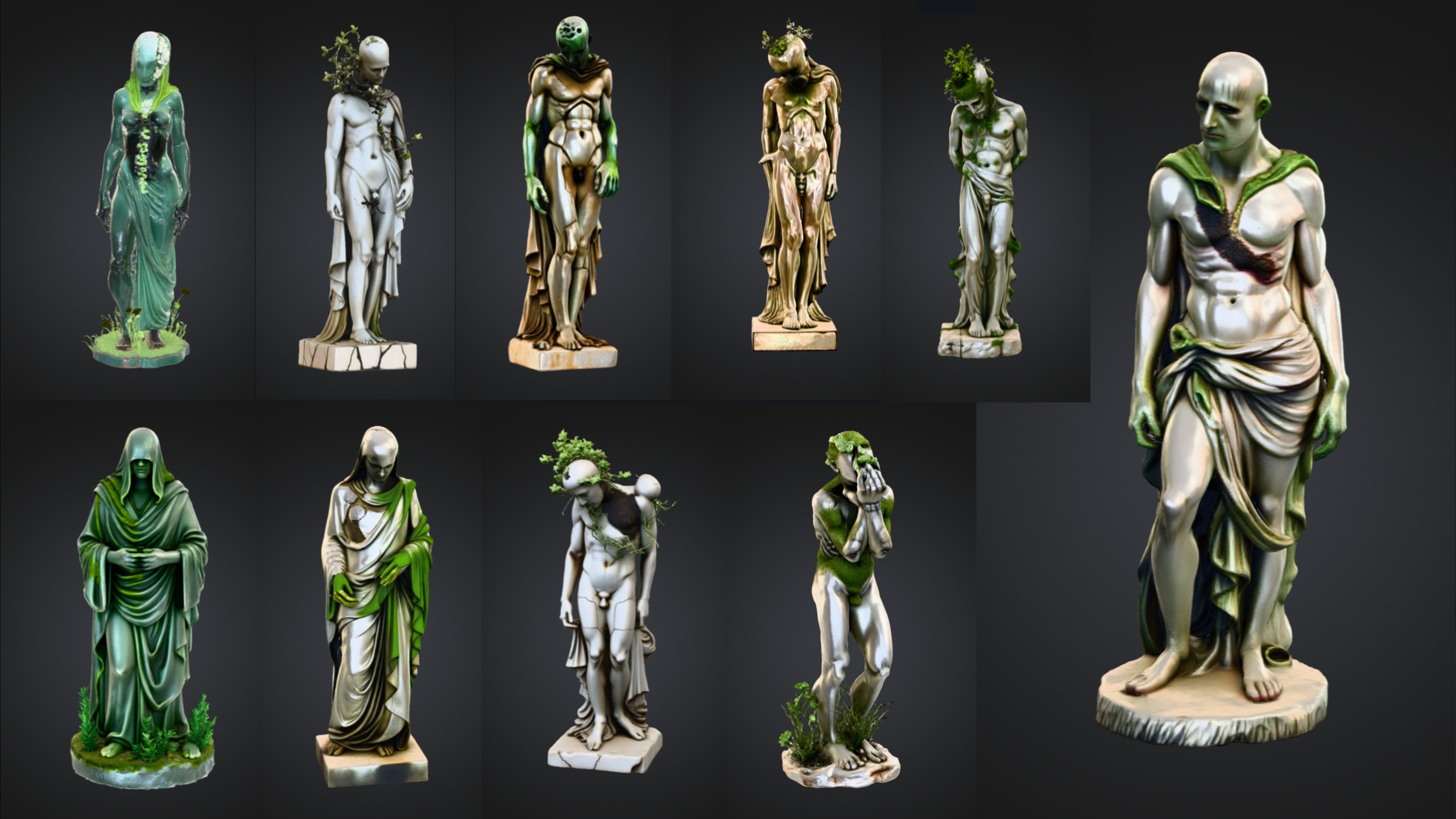
This tutorial covers how to make a cathedral temple interior in Unreal Engine that actually reads as one, using statues as the structural language of the space. We will use the Fantasy Statue Bundle, which ships 18 weathered marble statues split into a nine-piece Nature series and a nine-piece Tormented Souls series, plus a large table mesh you can repurpose as a plinth or altar base. Every mesh is a Nanite static mesh with automatic collision and 2K PBR textures, built for Unreal Engine 5.6, so the assets drop in ready to walk around without any LOD or collision setup on your part.
Because the meshes are dark, weathered marble, they lean gothic and dark-fantasy by default. That is ideal for a ruined cathedral, a cursed shrine or a forgotten temple. If you want a pristine, brightly-lit place of worship instead, the same placement principles hold; you will simply lean harder on lighting and on cleaner materials. The workflow below is about composition, and composition does not care about your colour palette.
Get the statues into your level
There are two ways to bring the bundle in. The simplest is to open the FantasyStatueBundle UE 5.6 project directly and work there. If you are dressing an existing level in your own project, instead right-click the bundle's content folder and choose 'Asset Actions' then 'Migrate' to copy the meshes, materials and textures into your project. Work in a 5.6 or newer project so the Nanite meshes import cleanly.
Once the content is in, open the 'Content Browser' and locate the statue meshes. They are named predictably: SM_NatureStatue_1 through SM_NatureStatue_9 for the Nature series, and SM_TormentedStatue_1 through SM_TormentedStatue_9 for the Tormented Souls series. The large table prop is SM_LargeTable. Drag any of them straight into the viewport. Each statue already carries its assigned material and 2K maps, has Nanite enabled and has automatic collision, so the player can walk up to it and bump into it the moment it is placed.
Before you start composing, pick a series intent for the space. A temple or shrine that is meant to feel reverent and overgrown reads well with the Nature series. A haunted cathedral, a crypt or a cult site reads better with the Tormented Souls series, whose figures carry the suffering expressions that sell dread. You can mix the two, but a clear majority of one series gives the interior a single coherent voice rather than a museum jumble.
Place statues symmetrically down the aisle
Sacred architecture is almost obsessively symmetrical, and your eye expects that symmetry. The fastest way to make a nave feel intentional is to line statues down both sides of the central aisle in matched pairs, facing inward toward the player's path. Players read mirrored pairs as deliberate and designed; scattered singles read as debris.
1. Select a statue in the viewport and open the 'Details' panel. Note its X position along the aisle and its Y offset from the centre line. Set a clean, round Y value, for example 400 units off-centre, so the figure sits just clear of the walking path.
2. Duplicate the statue with Alt-drag or Ctrl-W, and set the duplicate's Y to the negative of the first, for example -400. You now have a matched pair straddling the aisle. Rotate each so it faces inward across the aisle rather than down it; a slight inward turn makes the row feel like an honour guard watching whoever walks through.
3. Select both statues, then duplicate the pair and move the copies a fixed distance further down the aisle, say 600 units in X. Repeat to march the colonnade of statues toward the altar. Keeping the X spacing constant is what makes the rhythm feel architectural.
4. With nine meshes per series you have enough variety to avoid an obvious tiling pattern. Cycle through SM_NatureStatue_1 to _9 (or the Tormented equivalents) as you go down the rows, and add small random yaw of a few degrees per statue so the line feels carved by hand rather than stamped. Because every mesh is Nanite, you can pack the aisle densely without worrying about draw-call budgets the way you would with traditional LOD chains.
Build plinths and an altar from the table prop
Statues placed flat on the floor look like they wandered in. Real ones stand on plinths that lift them above eye level and give them authority. The bundle's SM_LargeTable mesh is your building block here: drag it in, scale it down on its vertical axis until it reads as a stone base rather than a table, and stand a statue on top so its feet sit flush with the upper surface.
Make a single plinth-and-statue arrangement you like, then group the statue and its base together and duplicate the whole group down the aisle. Grouping keeps the figure locked to its plinth as you copy it, so every station in the row stays consistent. Vary the plinth height slightly between stations if you want a more organic, hand-built ruin rather than a factory-perfect installation.
For the focal altar at the head of the nave, use the SM_LargeTable at or near its full size as the altar slab, and flank it with a matched pair of your most striking statues turned to face the approaching player. This is the one place in the room where you deliberately break the down-the-aisle rhythm: the altar is the destination, so it should feel different, taller and more frontal than everything that led up to it. If you own the Dark Fantasy Props Bundle, this is also where its altars, cauldrons, tomes and candelabra earn their place, layering hero detail onto the focal point that a statue-and-slab base alone cannot provide.
Cut volumetric light shafts through the space
Nothing sells a cathedral interior faster than god rays falling through high windows onto the statues below. In Unreal Engine this is volumetric fog plus a directional light, and it costs you almost nothing to set up.
1. Add an 'Exponential Height Fog' actor to the level and, in its 'Details' panel, enable 'Volumetric Fog'. Keep the fog density low to start; a thin haze is enough to catch light without washing the room out.
2. Select your 'Directional Light' (or add one), enable 'Cast Shadows', and orient it so the light enters through your window openings at a steep angle down the nave. The window mullions and the gaps between your statues will now carve visible shafts and shadow bars across the floor.
3. Position the brightest shaft to land on the altar or on a key statue pairing, so the lighting and the placement reinforce the same focal point. A shaft that hits the figure you most want the player to notice does more compositional work than any amount of extra geometry.
4. If you want hard, defined beams rather than a soft glow, raise the directional light intensity and nudge the volumetric fog scattering up gradually, checking the result from the player's eye height rather than from the top-down editor view. The effect that looks subtle from above is often perfect from the ground, and the ground is where your player stands.
Get the scale right relative to the player
The single most common mistake when dressing a sacred interior is statue scale. Drop a mesh in at its default size and it often reads as a tabletop figurine in a cavernous room, or a colossus that dwarfs the architecture. Both break the illusion instantly because the player's body is the yardstick for everything else.
Place a character or a simple 1.8-metre reference box in the level and judge every statue against it from eye height, not from the editor's free camera. A statue meant to be roughly human in stature should stand a head or two taller than the player once it is on its plinth; that extra height is what makes it feel like an object of veneration rather than a roommate. Statues meant as towering guardians can go far larger, but commit to it, because a half-scale giant just looks like a scaling error.
Set your scale on one statue, confirm it from the ground, then carry that exact scale value across the whole row so the colonnade stays consistent. Mixed scales down a single aisle are the fastest way to make an otherwise careful composition feel amateur. Once the scale reads true against the player, walk the full length of the interior at eye height one last time: the moment the statues, the plinths, the altar and the light shafts all sit at a believable human scale, the empty stone shell finally becomes a place.
Where to go next with the dressing
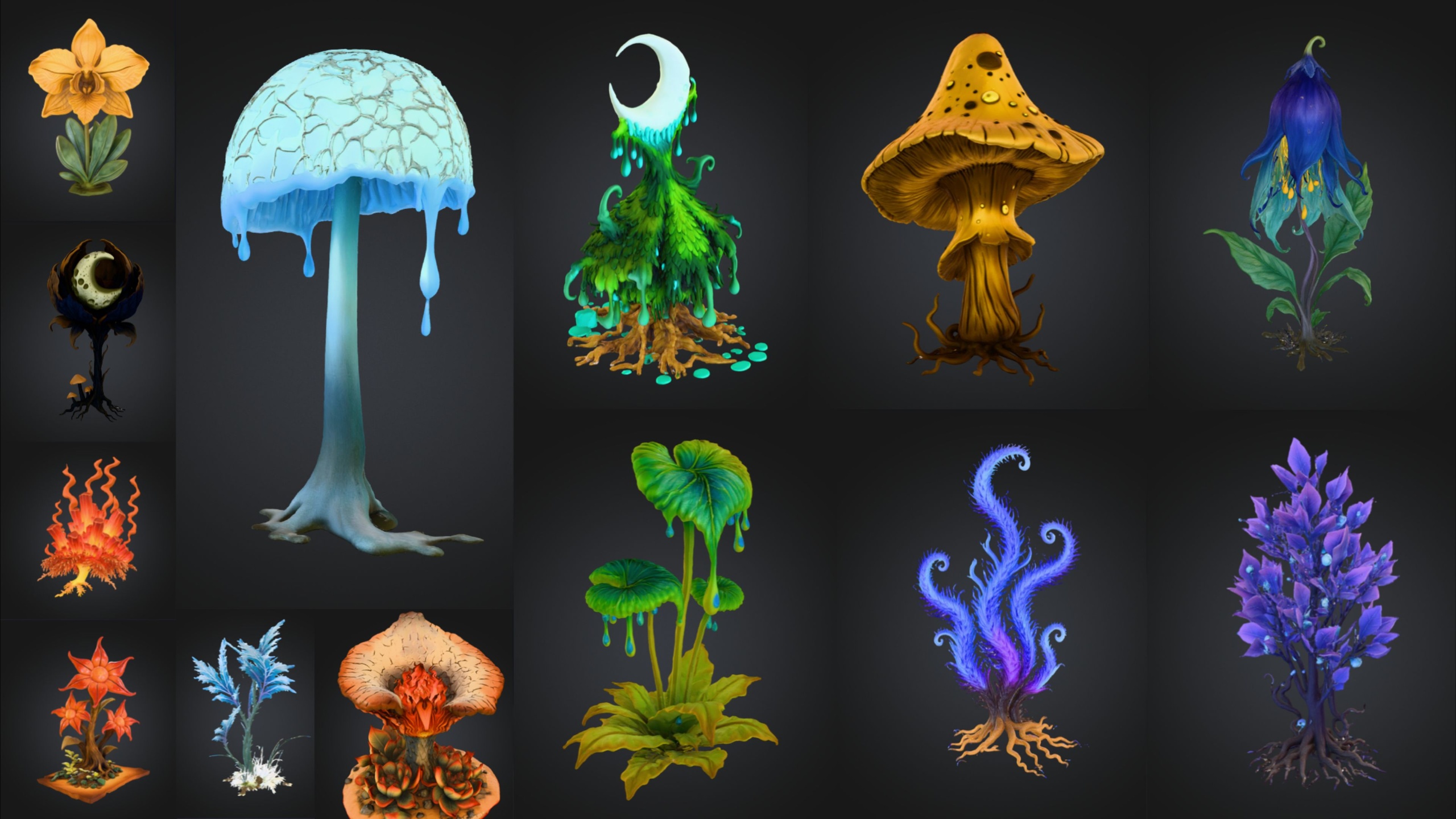
With the statue rows, plinths, altar and light shafts in place you have the skeleton of a convincing interior. From here the cheapest wins come from softening the hard architecture. Scatter the Fantasy Flower Pack's gothic blooms (nightshade, blood lotus, ember blooms among its 51 Nanite meshes) at the feet of the Nature statues to suggest a shrine reclaimed by growth, or feed them to the Foliage or PCG tools for denser ground cover along the aisle edges.
If you are building toward horror rather than reverence, the Grinning Moon Face Bundle gives you 13 unsettling moon faces; placing one large and distant through a high window turns the comforting shaft of light into something that watches the player back. And if your interior needs to fill out fast with thrones, tomes, lanterns and obelisks, the Dark Fantasy Props Bundle's 100-plus gothic artefacts share the same UE 5.6, Nanite, 2K-PBR pipeline as the statues, so everything sits together without a material mismatch. Build the bones with the statues first; layer the props once the space already reads as sacred.
FAQ
How do I make a cathedral or temple interior in Unreal Engine without modelling statues myself?
Block out the stone shell first, then dress it with a ready-made statue set. The Fantasy Statue Bundle gives you 18 Nanite marble statues plus a large table mesh you can use as plinths and an altar base. Drag the SM_NatureStatue_* or SM_TormentedStatue_* meshes down both sides of the aisle in matched pairs, build an altar from SM_LargeTable, and cut volumetric light shafts through the space. The statues ship with materials, collision and Nanite already set up, so there is no per-mesh configuration.
Which statue series suits a haunted cathedral versus a peaceful temple?
The bundle splits into a nine-piece Nature series and a nine-piece Tormented Souls series. The Tormented Souls figures carry suffering expressions that suit haunted cathedrals, crypts and cult sites, while the Nature series reads better for reverent, overgrown shrines and temples. Keeping a clear majority of one series gives the interior a single coherent voice.
Do the statues need LODs or collision setup before I place them?
No. Every mesh in the bundle is a Nanite static mesh with automatic collision, so you do not author LOD chains and the player can walk up to and bump into each statue the moment it is placed. The textures are 2K PBR and the assets are built for Unreal Engine 5.6.
How do I stop a row of statues from looking like an obvious repeating pattern?
With nine unique meshes per series you have enough variety to cycle through SM_NatureStatue_1 to _9 (or the Tormented equivalents) as you march down the aisle, rather than reusing one mesh. Add a few degrees of random yaw per statue and vary plinth height slightly so the colonnade reads as hand-built rather than stamped from a single asset.
Can I mix this with other props for a fuller scene?
Yes. The statues share a UE 5.6, Nanite, 2K-PBR pipeline with the sibling packs, so they layer together cleanly. The Dark Fantasy Props Bundle adds thrones, tomes, lanterns and altars for the focal point, the Fantasy Flower Pack adds gothic blooms to soften the architecture, and the Grinning Moon Face Bundle adds an unsettling moon to watch through a high window.
Fantasy Statue Bundle
Eighteen dark-fantasy statues and plinths — Nanite meshes with automatic collision and 72 textures at 2048². Gothic, weathered and game-ready for open-world set dressing.
Related on Fab


Related reading