article · 2026-06-24
The Easiest Games to Build with AI in 2026 (and Why That's a Trap)
Six genres sit in AI's strong zone today. That's exactly why buildability alone is worthless — the signal is buildability crossed with real, recent demand.

What are the easiest games to build with AI right now?
If you came here for a list, here it is, ranked easiest first by our buildability model: visual novel, interactive fiction, point-and-click adventure, hidden object, clicker or idle, and farming sim. These are the six game types that sit in what our AI Game-Buildability Radar calls the AI-buildable band — anything our model scores below 2.4 on a one-to-five scale, where one means AI does the work near end-to-end and five means expert, real-time craft. Visual novels score 1.80, interactive fiction 1.83, point-and-click 1.94, hidden object 2.07, clickers 2.23, and farming sim 2.38.
Those scores come from our Games-as-Recipes study, which broke a commercial game into roughly 45 reusable ingredients and judged each one by how much of the heavy lifting a generalist can hand to AI tools today. A genre's buildability is a weighted mean of the ingredients its identity rests on. The lower the number, the more of the game a single person can assemble with current tooling. Every one of these six genres has core ingredients that all land in AI's strong zone — there is no single part that forces you to be an expert.
One thing to be clear about before we go further: this is our editorial assessment of what tooling can do, not a measurement of anything, and it scores the automatability of the parts, not whether the resulting game is any good. Buildable is not the same word as good, and that distinction is the whole point of this article.
Why these six and not the other twenty-three
A game in our model is cooked in five kitchens: art, audio, narrative, code, and polish or feel. Those kitchens are not equally automated. Audio is the most solved, with an average ingredient difficulty of 2.2 in our model — voice acting itself scores a 1, the single most-automated craft in games. Art averages 2.57, narrative 2.78, code 3.0, and polish or feel sits right at the top at 3.75. The genres that come out easiest are the ones whose core ingredients draw almost entirely from the cheap kitchens and almost not at all from the expensive one.
Look at a visual novel. Its recipe is style-locked illustration, 2D backgrounds, branching dialogue, worldbuilding, voice, music, and a save-and-menu shell. In our ledger those ingredients score 2, 1, 2, 2, 1, 2, and 2. Not one core ingredient sits outside AI's reach. The only human job left is taste — deciding which fifty of five hundred generated portraits to keep, and whether the writing has a soul. Interactive fiction is even purer: it is mostly flavour text and branching dialogue, which is AI's single strongest domain, so it scores 1.83 despite being a complete, shippable format.
Run the same exercise on the genres people assume are AI-friendly and the picture changes fast. A 2D platformer scores 2.91 in our model — out of the buildable band — because its identity rests on character-controller feel, level design, and game juice, three of the things AI is worst at. The genre looks easy because its art and music generate themselves, but the part that makes it a game is exactly the part no tool automates. That is why the easy six are a short, specific list and not a long one.
The four things that keep most genres off the easy list
There are exactly four ingredients in our 45-part ledger that resist AI almost completely, and they are what pushes the other twenty-three genres up the difficulty scale. They are game feel and juice, which scores a flat 5 in our model; real-time authoritative netcode, also a 5; level, puzzle, and encounter design, which sit at 4; and the is-it-fun balance-and-tuning loop, also a 4. The pattern underneath is clean. AI is excellent at generating an artefact — a picture, a track, a paragraph, a boilerplate class — because an artefact can be judged on its own. It is poor at synthesis under real-time, fairness, and feel constraints, because those can only be judged in motion, against a player.
This is why a fighting game scores 4.09 and a battle royale 4.17 in our assessment. Their whole reason to exist is frame-perfect feel and authoritative netcode, the two ingredients scoring 5. AI shaves the edges of each but none of the cores collapse. The six easy genres are easy precisely because they sidestep all four ceilings — a visual novel has no netcode, no real-time feel, no encounter balance, and its puzzle content, where it exists, is light.
Practically, this gives you a fast test for any game idea. Write down its three or four load-bearing ingredients. If any of them is game feel, netcode, level or puzzle design, or the fun-tuning loop, AI changes your cost, not your difficulty — you still need the craft. If none of them are, you are looking at something a generalist can genuinely build today.
The trap: everyone else can build these too
Here is where the easy list turns on you. If a generalist can assemble a visual novel in a day, so can everyone else with the same tools. Buildability is not a moat — it is a commodity. The moment a genre drops into the AI-buildable band, the barrier that used to keep most people out is gone for all of them at once, and being able to make the thing stops being a meaningful advantage. The easy column should make you suspicious, not excited.
This is the most common mistake we see people make with data like ours. They read the buildability ranking as an opportunity ranking and rush to the top of it. But low difficulty is shared difficulty. The question that actually matters is not what is easy to build — it is what is easy to build and has proven, recent demand that buyers keep paying into. Easy plus empty is a graveyard. Easy plus crowded-with-buyers is a business.
It is also why your effort should move to the parts AI cannot commoditise. When the production of every asset and most systems is free, the value migrates entirely into curation, writing voice, art direction, and the feel of the thing. In a genre where the assets generate themselves, the differentiator is no longer that you made the assets — it is that yours are coherent, distinctive, and tasteful. The tool does the volume; you do the judgement.
Where easy meets demand: the opportunity window
To separate the real opportunities from the commodity column, we cross buildability with demand from the MythicLemon Games Catalogue, our own compiled dataset of roughly 82,000 released games. The filter is simple and strict: a genre has to score easy or near-easy in our model (2.7 or lower), carry real volume (at least 1,000 titles), and still be actively made (at least 40 percent of its titles released since 2023). Genres that clear all three are not dead niches you would be automating into a graveyard — they are where the thing AI builds best meets a crowd that keeps showing up.
From the buildable six, interactive fiction, hidden object, and clicker all clear the bar — interactive fiction with 3,137 titles and 48 percent of them recent, hidden object with 4,172 titles at 45 percent recent, and clickers with 2,174 titles at 47 percent recent. Just outside the easy six but still inside the window sit walking simulators (2.59, 3,171 titles, 51 percent recent) and card games (2.62, 2,180 titles, 45 percent recent). Together those five are the cleanest overlap of AI-easy and demonstrably wanted.
Farming sim deserves a special mention. It carries the hottest momentum of anything in the buildable band — 59 percent of its titles are recent — and at 2.38 it is squarely AI-buildable. The only reason it misses the formal window is a smaller catalogue, under 1,000 titles in our dataset. If you want momentum over raw volume, it is the standout. These figures are banded popularity counts and a relative-popularity proxy, not unit sales or revenue, but as a read on where players keep arriving they are about as honest a signal as a catalogue gives you.
The contrarian bet: pick the genre AI half-builds and can't finish
There is a sharper move than the opportunity window, and it runs the opposite way. The fastest-growing genre in our catalogue is deckbuilding — 64 percent of its titles released since 2023, faster than anything else we measured. And in our model it scores 3.18, which puts it in the systems-craft band, not the buildable one. Not because the art is hard; card art generates instantly. It scores hard because a deckbuilder's soul is balance, and balance is the AI-hardest content work there is.
Sit with what that combination means. The highest demand sits directly on top of the hardest-resisting core. That is not a problem to avoid — it is the most defensible position on the board. Let AI generate every card, every illustration, every line of flavour text for nothing, and spend your entire human budget on the one thing it cannot do, which is making the numbers sing. Compare that to a visual novel, where AI does everything and so can your competitors. In deckbuilding the easy parts are free for everyone, but the part that decides the winner still resists automation.
That is the real shape of the map. As AI commoditises production, all the value migrates into the four things it cannot do. The winning move is rarely to pick the single easiest genre. It is to pick a genre whose content AI builds for free and whose craft AI cannot touch, and to pour your whole effort into the craft.
How to actually build one (and where the tooling fits)
If you do take the easy route — a visual novel, a clicker, a small farming sim — treat AI as the production line and yourself as the art director. The workflow that works is to over-generate and then curate ruthlessly: produce far more illustration, voice, and flavour text than you need, then keep only the slice that is coherent and has a voice. The genres in the buildable band reward this because none of their core ingredients require expert craft, so your time is best spent on selection and consistency, not on making each asset from scratch.
The effects and motion layer is where a lot of these games quietly cost more than expected, because particle and flipbook work is fiddly and easy to get wrong. Our AI Flipbook Generator is built exactly for that gap: you type a prompt and it produces a game-ready Niagara spritesheet effect inside the Unreal editor, baking it down to a Texture2D, a Material Instance, and a ready-to-drop Niagara System, with a 55-entry effect library and style presets to keep things consistent. For a hidden-object scene's sparkle on an interactive item, a clicker's reward burst, or a farming sim's harvest puff, it lets the same over-generate-and-curate loop apply to VFX instead of having to author each effect by hand.
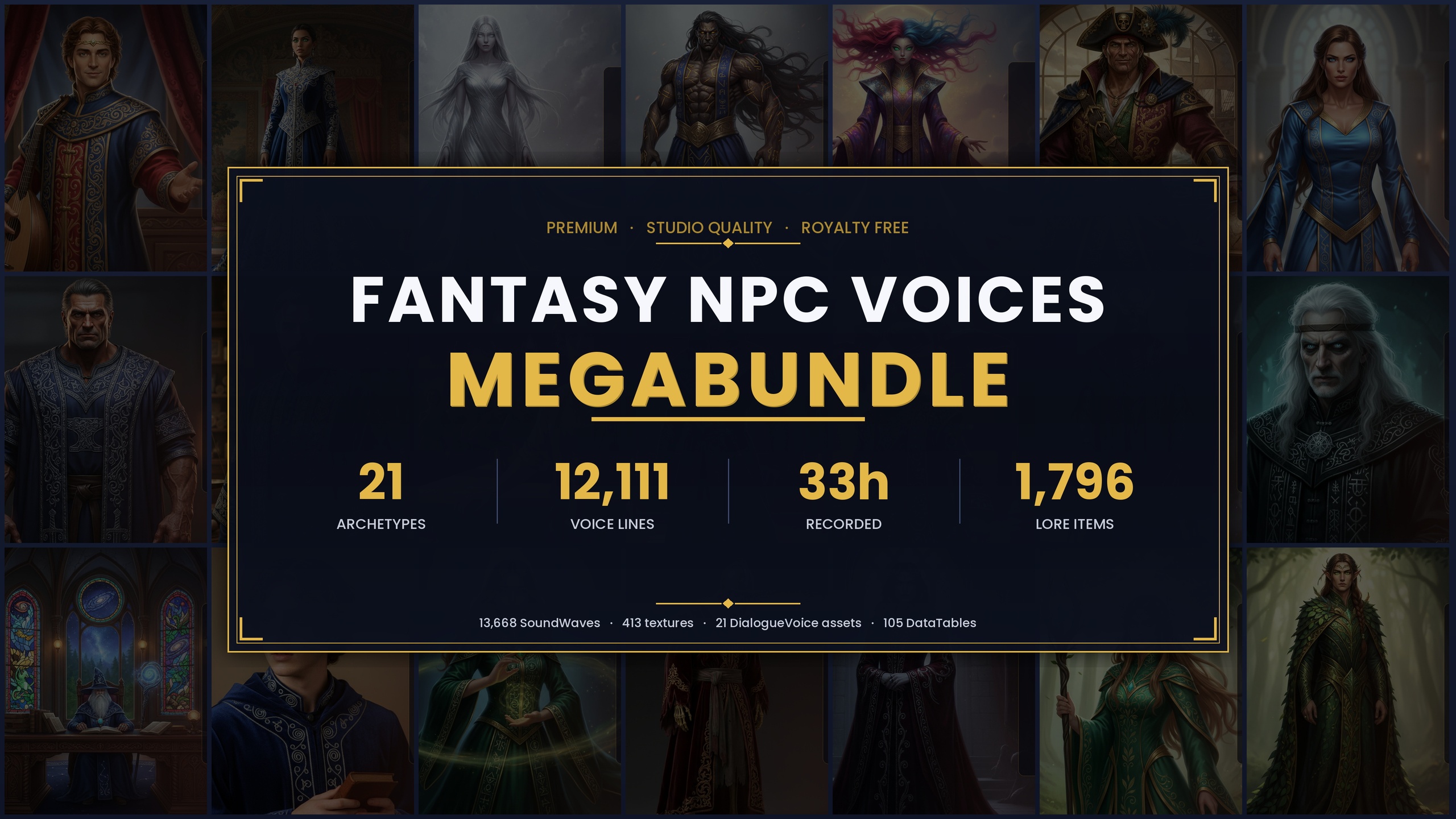
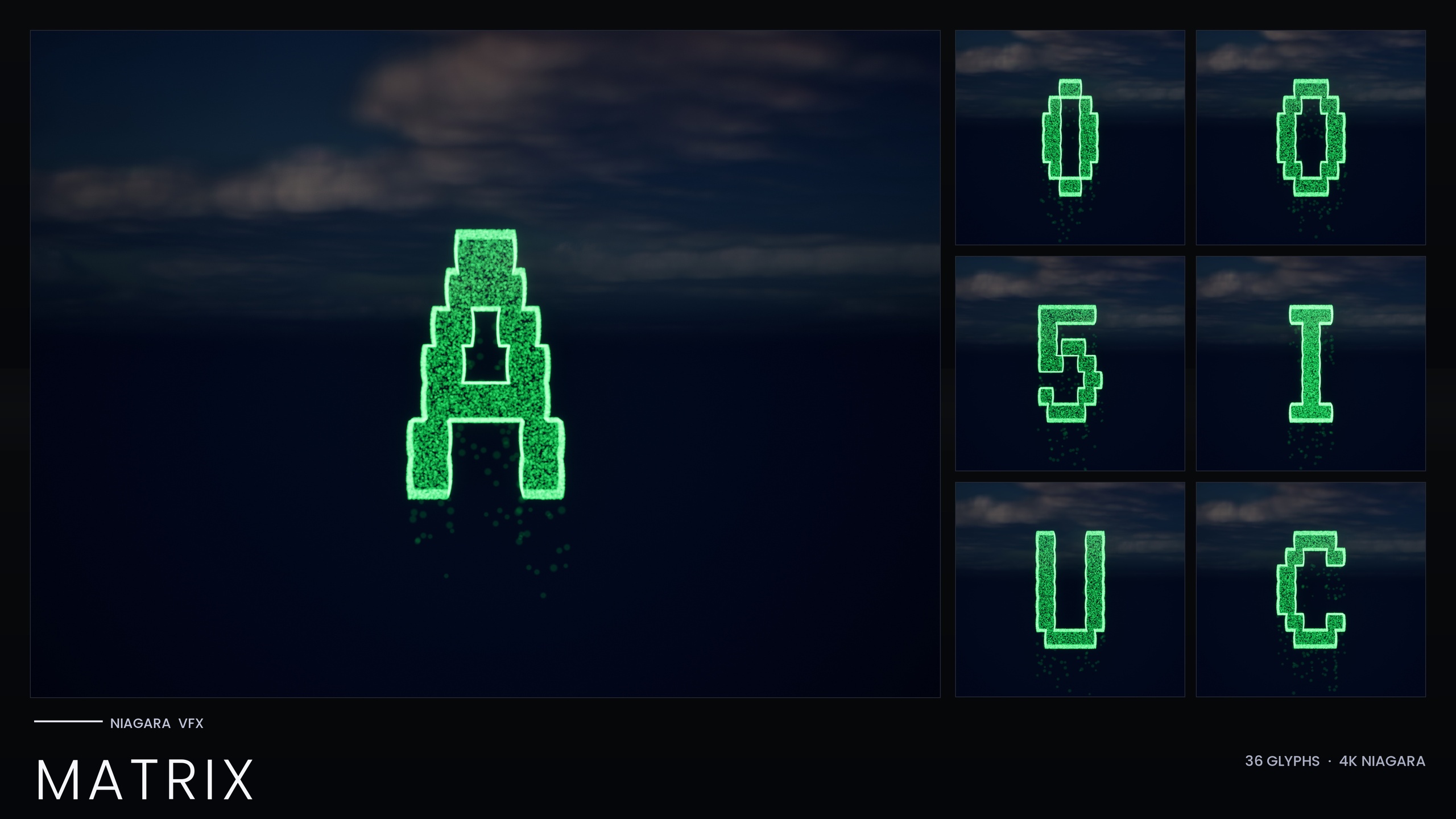
The same logic extends to the other cheap kitchens. Voice is the most-automated craft in our ledger, scoring a 1, so a dialogue-heavy genre can lean on a large voiced-line library — our Fantasy NPC Voices megabundle exists for that case — and a stylised, glyph-driven game can borrow a ready effects set like our Niagara Matrix Pack rather than building rain and code effects from zero. The principle holds across all of it: in the buildable band, the assets are the easy part. Spend your scarce hours on taste, coherence, and the small amount of feel these games still need.
The takeaway: buildability is the filter, not the answer
Pull the threads together and the strategy writes itself. The six easiest genres to build with AI in 2026 are real, and our model is confident about why they are easy — they draw entirely from kitchens AI has learned and avoid every ceiling it has not. But easy is shared. The instant a genre becomes buildable by a generalist, it becomes buildable by every generalist, and the ability to make it stops being worth anything on its own.
So use buildability as the first filter and demand as the second. From the easy column, the overlap with proven, recent demand points at interactive fiction, hidden object, and clickers, with walking sims and card games just alongside, and farming sim as the momentum pick. Or go contrarian and take deckbuilding, where the demand is loudest and the craft resists automation hardest — the most defensible board position there is. Either way, let AI own the production and spend yourself on the part it cannot: the taste, the writing, the feel, and the question of whether the thing is actually fun.
The six most AI-buildable genres
| Genre | Buildability (lower = easier) | Titles | Released 2023+ |
|---|---|---|---|
| Visual Novel | 1.80 | 5,481 | 37% |
| Interactive Fiction | 1.83 | 3,137 | 48% |
| Point & Click | 1.94 | 5,198 | 37% |
| Hidden Object | 2.07 | 4,172 | 45% |
| Clicker / Idle | 2.23 | 2,174 | 47% |
| Farming Sim | 2.38 | 835 | 59% |
Buildability is a weighted mean of each genre's core ingredients' AI-difficulty (1-5, lower = more automatable). Our editorial assessment of current tooling, not a measurement. Demand figures are relative-popularity counts from the MythicLemon Games Catalogue, not unit sales.
Easy and in demand — the opportunity window
| Genre | Buildability | Titles | Released 2023+ |
|---|---|---|---|
| Interactive Fiction | 1.83 | 3,137 | 48% |
| Hidden Object | 2.07 | 4,172 | 45% |
| Clicker / Idle | 2.23 | 2,174 | 47% |
| Walking Simulator | 2.59 | 3,171 | 51% |
| Card Game | 2.62 | 2,180 | 45% |
Genres scoring 2.7 or lower in our buildability model that also carry at least 1,000 titles and at least 40% released since 2023. Demand figures are banded popularity counts from the MythicLemon Games Catalogue, a relative-popularity proxy, not sales.
FAQ
What is the single easiest type of game to build with AI in 2026?
By our buildability model the visual novel, scoring 1.80 on our one-to-five scale where lower means more automatable. Every core ingredient — style-locked illustration, backgrounds, branching dialogue, worldbuilding, voice, music and a save-and-menu shell — sits in AI's strong zone, so a generalist can assemble one with current tooling. This is our editorial assessment of what tooling can do, not a measurement, and it scores the parts, not whether the game is good.
If these genres are so easy, why isn't 'easiest' the same as 'best opportunity'?
Because buildability is shared. The moment a genre becomes buildable by a generalist it becomes buildable by every generalist, so being able to make it stops being an advantage. The real signal is buildability crossed with proven, recent demand. From the easy genres, interactive fiction, hidden object and clickers clear that bar in our catalogue, with walking sims and card games just alongside.
Can AI make a good game on its own?
No. Our scores measure how much of each ingredient AI can produce, not whether the result is fun. You can generate every asset and most systems of a competent game in a weekend and it will still feel dead without the human passes no tool automates. There are four things AI still cannot do: game feel and juice, real-time authoritative netcode, level and puzzle design, and the is-it-fun balance loop. Buildable is not good.
Which easy genre has the most momentum right now?
Farming sim. In the MythicLemon Games Catalogue, 59 percent of its titles released since 2023 — the hottest recent share of any genre in the AI-buildable band — and at 2.38 it scores squarely buildable. It misses our formal opportunity window only because it has a smaller catalogue, under 1,000 titles. These are relative-popularity counts, not sales, but as a read on where players keep arriving it stands out.
What is the contrarian alternative to picking an easy genre?
Pick deckbuilding. It is the fastest-growing genre in our catalogue, with 64 percent of its titles released since 2023, but it scores 3.18 in our model because its core is balance — the AI-hardest content work. Highest demand sitting on the hardest-resisting core is the most defensible position there is: let AI generate every card and illustration for free, and spend your whole human budget on making the numbers sing.
Where does AI tooling actually save the most time on these games?
In the cheap kitchens — art, audio and narrative — where most core ingredients of the easy genres live. Treat AI as a production line: over-generate illustration, voice, flavour text and effects, then curate ruthlessly. For the VFX layer specifically, a tool like our AI Flipbook Generator produces a game-ready Niagara spritesheet effect from a text prompt inside the Unreal editor, so the same generate-and-curate loop applies to effects instead of authoring each one by hand.
AI Flipbook Generator
Type a prompt, get a game-ready effect. AI Flipbook Generator turns text into flipbook spritesheets via OpenAI image models, then bakes them to Texture2D, Material Instance and a ready-to-drop Niagara System — with a 55-entry effect library, style presets and multi-variant batching. Uses your own OpenAI API key; nothing is proxied through us.