article · 2026-03-24
Lore-Driven Landscapes: Terrain That Looks Like a Skull or a Giant Hand in Your Fantasy RPG
How a recognisable terrain silhouette turns an empty island into a place players want to explore.
Why a recognisable terrain shape sells a fantasy setting
Most fantasy RPG worlds are built from generic terrain: a coastline here, some mountains there, an island that could belong to any game ever made. It is competent, and it is forgettable. The problem is that a player flying over a nondescript landmass has nothing to latch onto, no reason to assign it meaning, and no story hook to chase.
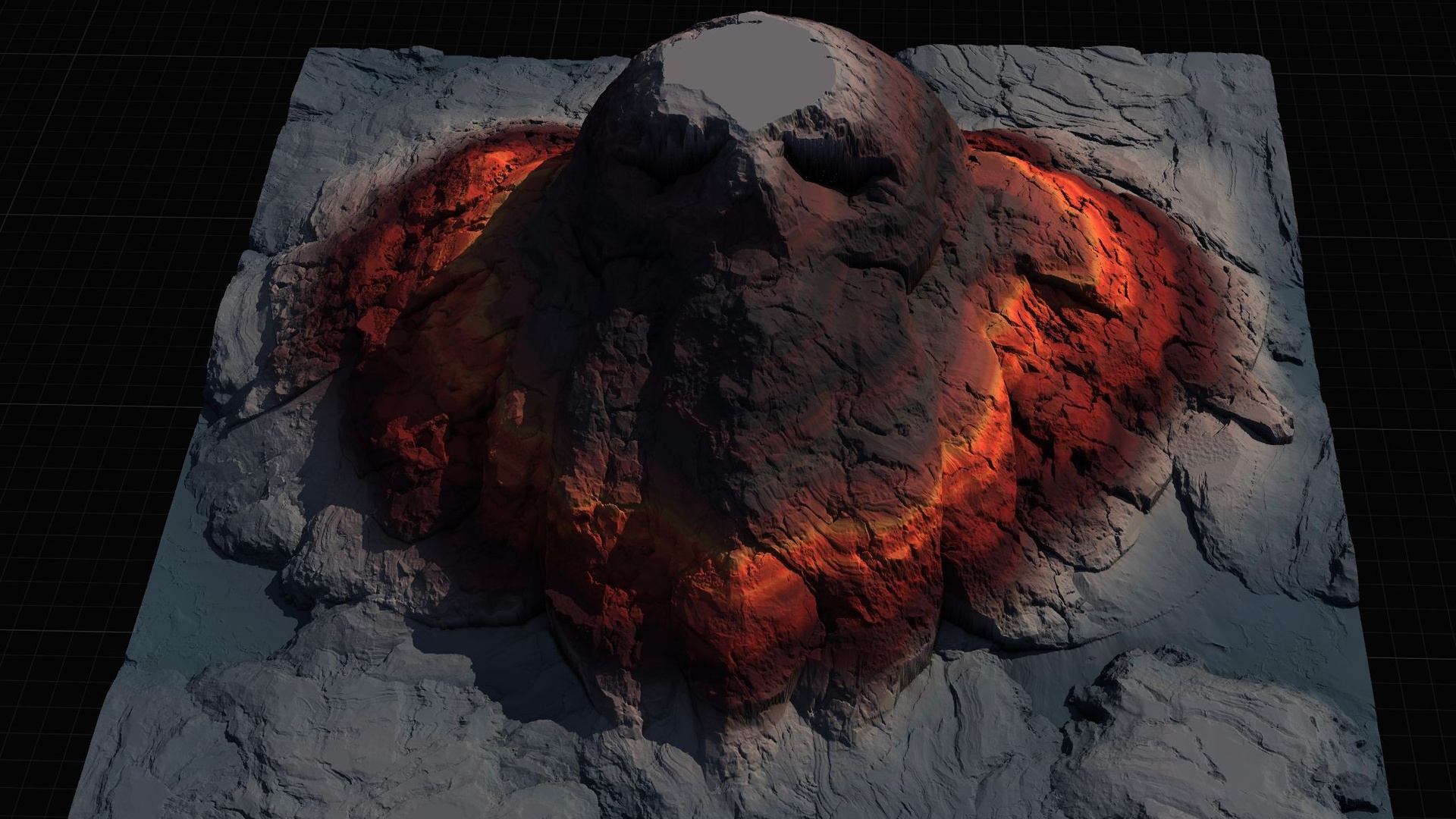
If you have been searching for fantasy RPG landscape ideas - terrain that looks like a skull, a hand or some other legendary shape in Unreal - the instinct behind that search is correct. The moment a landmass reads as a giant stone hand reaching out of the sea, or a skull staring up from the waves, the player's brain does the heavy lifting for you. They invent the lore before you write a line of it: who carved this, what happened here, what is buried underneath. The silhouette becomes the quest.
Sculpting that kind of shape by hand is slow and finicky, which is exactly why a pack of pre-shaped heightmaps is useful. The Mythic Relic Landscape Pack ships 14 fantasy landscapes whose terrain forms iconic shapes - Skull Island, the Hand of God Isles, the Island of Angels, the Island of the Fallen, Blade of the Gods, the Bone Graveyard, the Island of Forgotten Tomes and more - so you start from a recognisable form rather than a blank canvas.
What you actually get, and how it imports
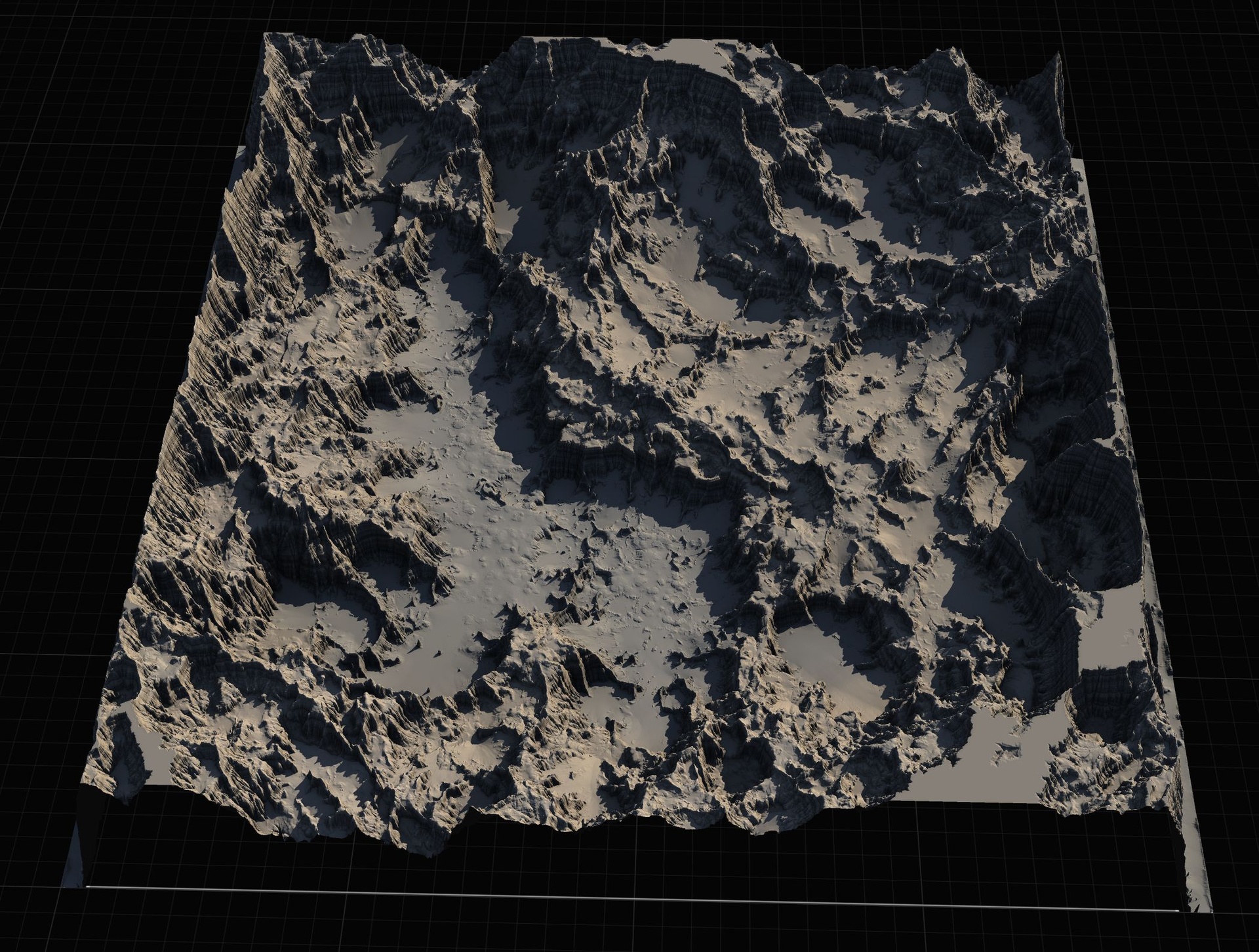
Each of the 14 maps comes as 16-bit grayscale heightmaps at four resolutions - 1K, 2K, 4K and 8K - so you can drop in a small version for a focused set-piece level or the full 8K version for an open-world island. The maps are import-ready, and every one ships with a Gaea source file so you can re-edit the legendary shape if you want to exaggerate the skull's eye sockets or stretch the giant hand's fingers.
Importing follows the standard Unreal landscape workflow. Open the 'Landscape' panel, switch to the 'Manage' tab, choose 'Import from File', and point it at the grayscale heightmap for the resolution you want - smaller files for sub-regions, the 8K file for a full explorable world.
The pack includes an AutoMaterial that paints the terrain by configurable height and incline rules, with named layers (Base, Snow, Cliff, Mid-High, Mid-Low, Ground) plus five custom layers for hand-painting. After you assign it, expect an initial black landscape; switch to the 'Paint' tab, use 'Create Layers from Assigned Material', then 'Fill Layer' on the base layer to let it paint by height and slope. You tune the look - base colour, normal, and the height and slope thresholds - per layer in the Material Instance. Every map also ships a textured, lit demo level (oceans applied where appropriate) so you can see the intended result before touching a setting.
One honest note on the catalogue copy: the product listing mentions a heightmap count that doesn't quite match the folders. The reliable way to describe it is 14 maps at four resolutions each, from 1K up to 8K.
Reinforcing the theme with relic props
A skull-shaped island is a strong opening, but the silhouette only reads from above. Down at player height, you need set dressing that confirms the theme without a single line of dialogue. The pack helps here too: it bundles a set of relic-themed FBX meshes for exactly this job - a skull statue, a turtle statue, an Anubis figure, a fallen-angel statue, books and tomes, a human skeleton pose, medieval weapons and an oni head.
Use them to anchor meaning at the points players actually walk. Ring the rim of Skull Island's eye sockets with the skull statue and scatter the skeleton pose along its approach. Plant the fallen-angel statue at the summit of the Island of the Fallen so the climb pays off with the thing the island is named after. Lay the tomes around the Island of Forgotten Tomes to make the name literal. The terrain states the legend at a distance; the relic props confirm it up close.
These are bonus dressing meshes rather than a hero-asset showcase, so treat them as thematic punctuation - statues at shrines, skeletons at battle sites, weapons at a fallen warrior's resting place - rather than the entire art budget for your level.
Pairing terrain shape with quest design
The biggest payoff from a lore-driven landscape is that the shape can drive the quest, not just decorate it. Because the silhouette already implies a backstory, you can hang structure on it cheaply.
Let the shape define the destination. On the Hand of God Isles, the palm is an obvious arena and the fingertips are five natural waypoints - one relic, one mini-boss or one piece of the map per finger. On Skull Island, the two eye sockets and the mouth are pre-built points of interest before you place a single trigger volume; the AutoMaterial's cliff and snow layers will already separate the high brow from the low jaw, giving you readable verticality to gate progression behind.
Let the shape carry the reveal. Players rarely see the full silhouette until they gain height or a vantage point, so the moment they realise the entire island is a skull or a reaching hand becomes a free narrative beat. Place that reveal deliberately - at the top of the Stairway to Heaven map, or the crest of Blade of the Gods - and the geography itself delivers a story moment you didn't have to script.
If you want to push a shape further, open its included Gaea source and re-export. Carving the skull's teeth deeper or splitting the Bone Graveyard into more distinct ridges lets you tune the form to your encounter design rather than bending your design around fixed terrain.
Where this fits, and what to reach for next
The Mythic Relic Landscape Pack is the budget, lore-flavoured entry in the MythicLemon landscape line, and it is deliberately beginner-friendly: import a heightmap, apply the AutoMaterial, dress with the relic meshes, ship a recognisable island. It targets Unreal Engine 5.5 to 5.6, is Windows content, and is the lowest-priced pack in the line.
It is a curated set of fixed shapes, though, so it is most powerful when one of its 14 silhouettes matches the story you want to tell. If you instead need a spread of conventional biomes - islands, mountain passes, canyons, volcanoes and huge open-world maps - the sibling Fantasy Landscape Pack covers that ground with 15 maps and the same AutoMaterial workflow.
And if your problem is generating your own shapes rather than picking from a set, look at the stamp tools in the same family. Landstamp Pro is a C++ editor plugin that drops non-destructive, re-editable terrain stamps - mountains, canyons, rivers, craters - and can even extract a heightmap from any static mesh, so you could turn a sculpted skull mesh into a reusable stamp. Landscape Stamp Tool is the lighter Blueprint-only sibling that morphs a World Partition landscape in place with no code. Start with the shaped pack to learn the workflow, then graduate to the stamp tools when you want to author legendary terrain of your own.
FAQ
Are there really fantasy RPG terrain shapes that look like a skull or a giant hand in Unreal?
Yes. The Mythic Relic Landscape Pack ships 14 heightmaps whose terrain forms iconic shapes, including Skull Island, the Hand of God Isles, the Island of Angels, the Island of the Fallen, Blade of the Gods and the Bone Graveyard. You import them as standard Unreal landscapes, so the legendary silhouette is built into the geometry rather than something you sculpt by hand.
What resolutions do the heightmaps come in?
Each of the 14 maps is provided as a 16-bit grayscale heightmap at 1K, 2K, 4K and 8K. Use a smaller resolution for a focused sub-region or set-piece, and the 8K version when you want the shape to fill a full open-world island.
Can I customise the terrain shape?
Yes. Every map includes a Gaea source file, so you can open the original project, adjust the legendary form - deepen a skull's eye sockets, stretch a hand's fingers - and re-export a new heightmap to import. The pack also includes an AutoMaterial that auto-paints by height and slope, with five custom layers for hand-painting on top.
Does it include props to dress the scenes?
It bundles a set of relic-themed FBX meshes for set dressing - a skull statue, a turtle statue, an Anubis figure, a fallen-angel statue, tomes, a skeleton pose, medieval weapons and an oni head. These are bonus dressing meshes intended to reinforce the theme at player height, not a full hero-asset kit.
Which Unreal Engine versions does it support?
The pack targets Unreal Engine 5.5 to 5.6. It is Windows content with a personal and commercial licence, and it is the lowest-priced pack in the MythicLemon landscape line.
Mythic Relic Landscape Pack
Fourteen fantasy landscapes with an auto-material — 52 heightmaps spanning islands, underworlds and mythic terrain. Beginner-friendly, paint-your-own-textures, ready for any RPG world.
Related on Fab
Related reading