
tutorial · 2025-08-07
PCG in UE5 for Foliage and Prop Placement: Beyond Hand Painting
Replace manual foliage painting and prop scattering with Procedural Content Generation graphs that scale to open worlds and survive iteration.
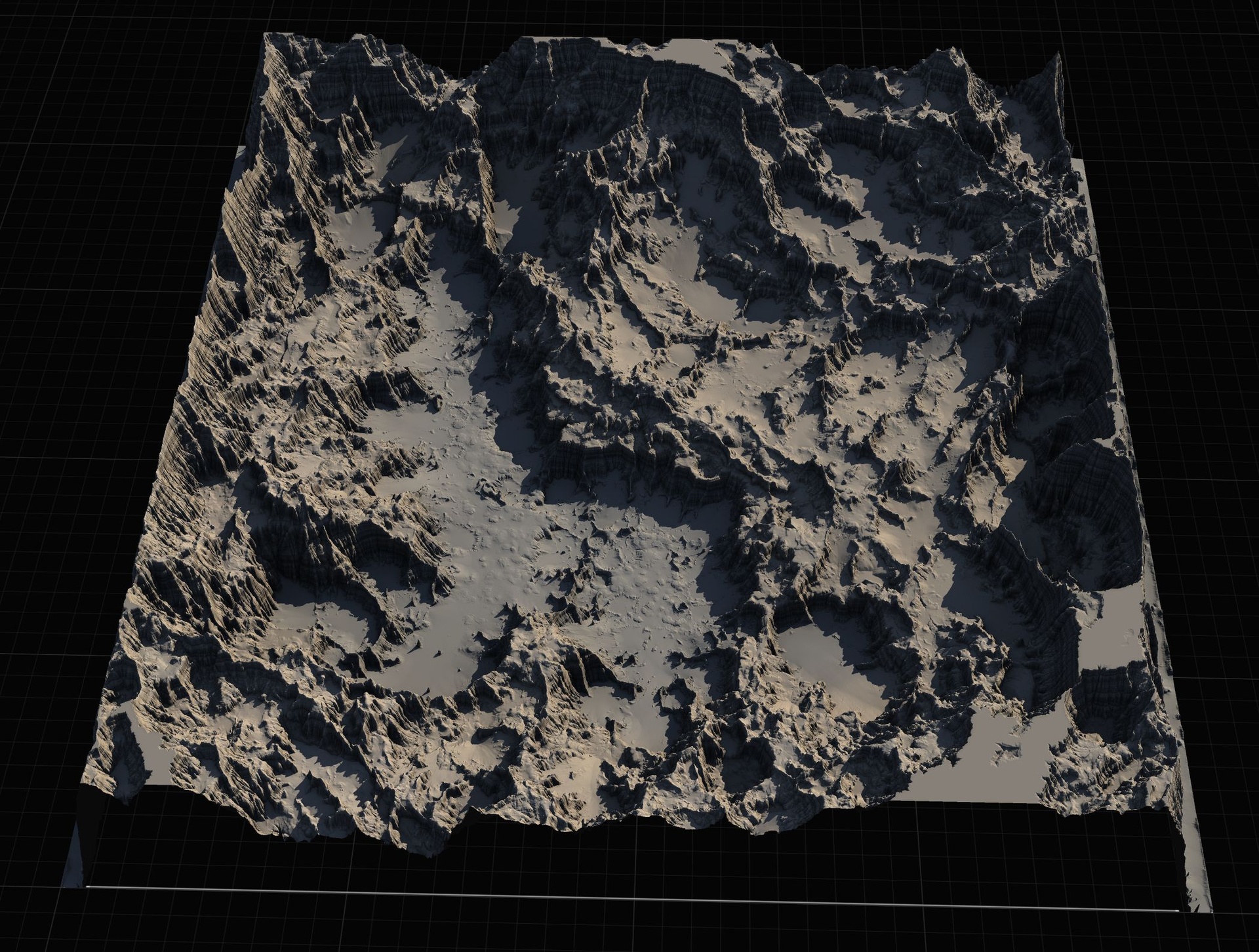
Why hand painting stops scaling
Painting 10,000 flowers by hand for a hero meadow is fine. Painting 500,000 instances across 20 biomes for an open world is not. Every time the landscape changes (new stamp, height tweak, road addition) the foliage has to be repainted or at least heavily cleaned up.
PCG (Procedural Content Generation) in UE5 lets you define rules once: 'place these flowers on slopes between 5-25 degrees, avoid within 300 units of paths, use this density curve based on noise'. Then regenerate when the terrain changes.
The key insight from 2025-2026 projects is that PCG is not 'fully automatic ugly scatter'. Good PCG graphs still have many artist-authored inputs (density masks, exclusion zones, hand-placed hero clusters) but remove the repetitive 90% of the work.
Core PCG graph structure for foliage
A typical foliage PCG graph has these stages: Get Landscape Data (height, slope, layer weights) → Apply Noise / Masks → Filter points by rules → Spawn static mesh instances or foliage types → Optional post-process (scale/rotation variation, collision checks).
Use the 'Landscape' node or 'Get PCG Landscape Data' to read height and slope. Combine with a 'Density' node driven by a texture mask or runtime noise so different biomes get different base densities without duplicating the whole graph.
Add 'Exclusion' volumes or spline-based masks for roads, rivers, and player-built areas. These are the places where artists still want precise control, and PCG makes it easy to carve them out automatically.
Keeping artists in control
Expose parameters on the PCG graph (density multiplier per biome, max slope, min distance to path). Artists can tweak these in the level without touching the graph logic.
Use 'Surface Sampler' or 'Points from Spline' for hero placements that should feel hand-authored. Blend these with the procedural points using a 'Merge' or priority system so a few carefully placed clusters override the rules.
Version the graph. When you change the rule set, you can re-generate only dirty regions or the whole map. This is dramatically faster than repainting by hand after every terrain change.
Performance and streaming considerations
PCG can generate millions of points. Be aggressive with culling: use 'Cull Distance' volumes, split graphs by biome or streaming cell, and prefer foliage types over raw ISM when you can (Nanite foliage is very efficient).
For open world, generate at edit time into World Partition cells rather than purely at runtime unless you have a strong reason for fully dynamic scatter (player terraforming, seasons, etc.).
Profile with the Nanite overview and foliage stats. PCG itself is usually not the bottleneck; it's the resulting instance count and material complexity that hurts.
FAQ
Is PCG only for huge worlds? Can small teams use it?
Yes. Even a 1 km² map benefits. The main win is iteration speed when the terrain keeps changing during production, not just raw scale.
Do I still need the Foliage tool at all?
Yes, for tiny hero patches, debugging, and quick experiments. Many teams use PCG for the bulk and the Foliage tool for surgical overrides.
Massive Open World Landscape Pack
Fourteen ready-to-play open-world landscapes with an auto-material setup — 56 heightmaps from 1K to 8K, including volcanic islands and oceans. Drop in, paint your own textures and build your world.
Related on Fab


Related reading